

 Las Vegas has never been particularly shy about trying something new.
We’ve watched the city reinvent itself more than once, from a railroad town to a gambling destination, then into the entertainment, sports and convention city we know today. Now another change is quietly rolling onto Las Vegas streets, and this one doesn’t have anyone sitting behind the wheel.
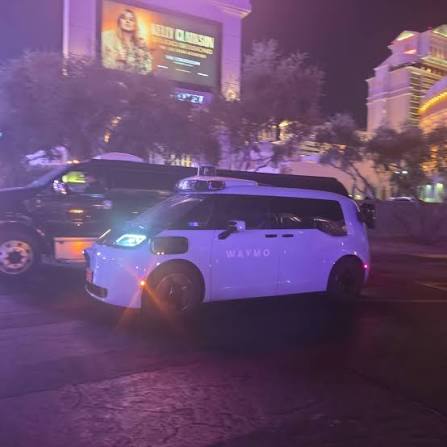
Waymo has officially begun opening its fully autonomous robotaxi service to the public in Las Vegas.
That means a car can pull up, take you where you’re going and drop you off without a human driver ever touching the steering wheel.
And while robotaxis may sound like something from the future, the future has apparently found its way to Las Vegas.
Waymo Is Starting Small
Waymo is beginning its Las Vegas service with a few dozen of its new Ojai robotaxis and will gradually invite members of the public to ride.
For now, riders will need to request access and receive an invitation before they can use the service. In other cities, Waymo has generally expanded availability after the initial rollout.
The current Las Vegas service area includes the Strip south of Highway 589 and extends into the southwest valley toward Boulder Junction. Waymo says both the fleet and service area are expected to grow over time.
Las Vegas becomes Waymo’s 15th market as the company continues expanding its autonomous ride service around the country.
What About Harry Reid International Airport?
This is one of the first questions many Las Vegas residents and visitors are likely to ask.
Not yet.
When Nevada regulators approved Waymo to operate in Clark County, the approved geographic area included Harry Reid International Airport. However, that approval does not automatically allow Waymo to pick up and drop off passengers there.
Waymo will need separate authorization from the Clark County Department of Aviation before airport service can begin.
If that eventually happens, it could become one of the more significant uses for robotaxis in Las Vegas. With more than 40 million visitors coming to Las Vegas in a typical year, transportation between the airport, Strip, Downtown and residential neighborhoods is a very big business.
Waymo Isn’t the Only Robotaxi in Town
Las Vegas is quickly becoming an interesting testing ground for autonomous transportation.
Amazon-owned Zoox is already offering paid robotaxi rides to the public in Las Vegas, and Nevada regulators have also approved autonomous vehicle network applications from Waymo and Tesla.
Waymo has been authorized for up to 1,000 autonomous vehicles during its first 12 months under its Nevada permit. Tesla was authorized for up to 5,000.
Those are maximum authorized fleet sizes, not promises that thousands of driverless vehicles will suddenly appear on Las Vegas streets.
Still, it gives us an idea of where this could be headed.
A few dozen robotaxis may be a curiosity.
A few thousand could actually begin changing how people get around Las Vegas.
Why Las Vegas Makes Sense for Robotaxis
Las Vegas may turn out to be a particularly interesting market for autonomous transportation.
We have millions of tourists who arrive without cars. We have a huge hospitality workforce traveling to and from the resort corridor every day. We have conventions, concerts, sporting events and major events that create enormous swings in transportation demand.
Then there is the Las Vegas Valley itself.
For decades, our growth has been built around the automobile. Neighborhoods stretch across a large valley, and for most residents a car isn’t optional.
Robotaxis aren’t going to change that overnight. But if autonomous transportation becomes widely available and reasonably priced, it could eventually give some Las Vegas households another option.
Could a two-car household someday become a one-car household because the second vehicle isn’t needed as often?
Could older residents remain independent longer without having to drive?
Could tourists explore more of Las Vegas beyond the Strip if getting around becomes easier?
Those are much more interesting questions to us than whether a driverless car can make a left turn on Las Vegas Boulevard.
Of Course, Las Vegas Will Put Them to the Test
Driving in Las Vegas isn’t exactly a controlled laboratory.
Our streets have tourists who don’t know where they’re going, residents who know exactly where they’re going and would like everyone else to get out of the way, construction cones that seem capable of reproducing overnight, pedestrians, cyclists, rideshare vehicles, taxis and some very creative interpretations of a yellow traffic light.
Then throw in a major event at Allegiant Stadium, 100,000 convention visitors and Friday afternoon traffic on I-15.
If autonomous vehicles can become routine here, they will have earned their Nevada stripes.
Waymo says its autonomous driving system has accumulated more than 200 million miles of real-world driving experience, and the company has been operating fully autonomous ride-hailing services in other U.S. cities for years.
Las Vegas will now get to see how that technology handles our particular version of organized chaos.
What Does This Have to Do With Las Vegas Real Estate?
Probably nothing tomorrow.
Possibly quite a bit over the long term.
Transportation has always influenced where people choose to live. Freeways, major streets, public transportation and commuting times all play a role in what makes one neighborhood more convenient than another.
If autonomous ride services eventually become common, affordable and available throughout the valley, they could subtly change that equation.
The effect might be particularly meaningful for older neighborhoods closer to Downtown Las Vegas and the resort corridor. Many of our vintage neighborhoods were built long before today’s sprawling suburbs and already benefit from relatively central locations.
That doesn’t mean robotaxis are about to increase anybody’s property value.
It does mean they’re worth watching.
At Very Vintage Vegas, we spend most of our time talking about homes, neighborhoods, housing inventory and the history that makes Las Vegas interesting.
But sometimes the things happening outside the housing market eventually become part of the housing story.
Driverless taxis cruising down Las Vegas Boulevard certainly qualify.
Welcome to Las Vegas, Waymo
For now, Waymo’s Las Vegas debut is small.
A few dozen vehicles. A limited service area. Invitation-only access.
But Las Vegas has a habit of taking small experiments and turning them into something much bigger.
Twenty years ago, the idea of getting into a stranger’s personal car because you summoned them with your phone sounded pretty strange too.
Now we’re apparently skipping the stranger altogether.
Welcome to Las Vegas in 2026.
Source: