

 A new UNLV report raises concerns about Nevada’s housing supply, affordability, and what lies ahead for homebuyers.
Las Vegas has never been a city that was afraid to build. For decades, new subdivisions, master-planned communities, and residential developments have spread across the valley to accommodate a growing population.
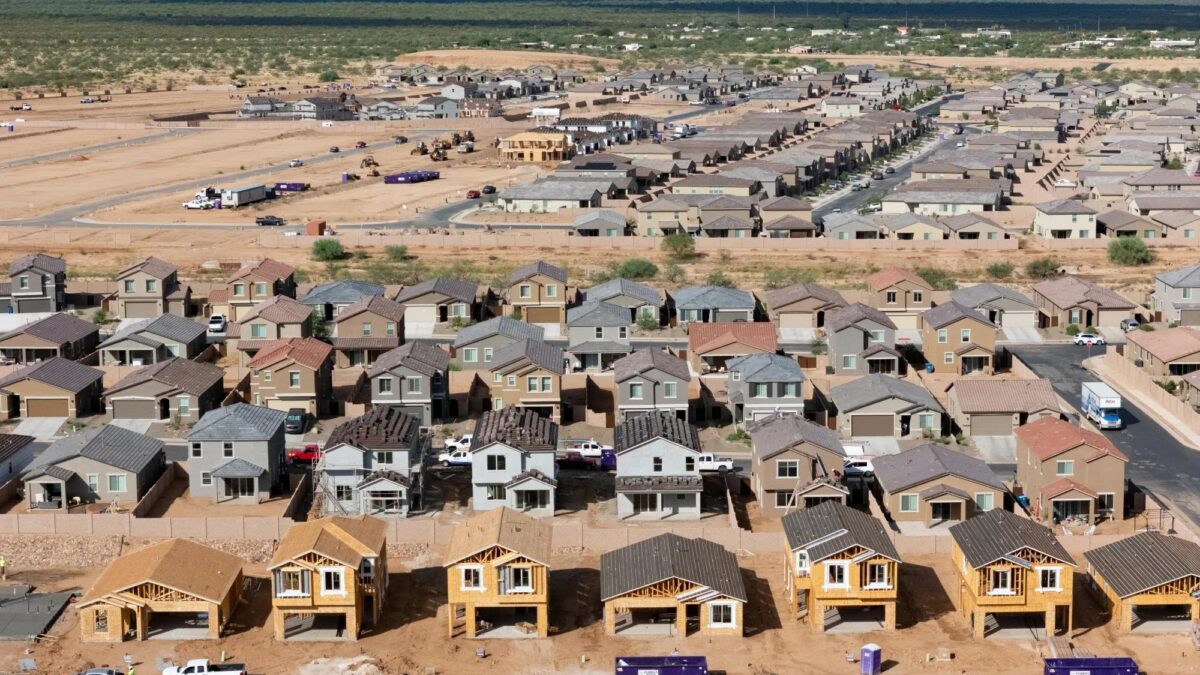
But a new report from UNLV’s Lied Center for Real Estate suggests that Nevada’s pace of new housing construction is headed in the wrong direction.
According to The 2026 Housing Supply Pipeline Rankings, released in October, Nevada ranks 49th out of 50 states and Washington, D.C. when several measures of new housing permitting are considered.
Perhaps more concerning is how quickly construction activity has declined.
New Housing Permits Have Fallen 29%
From January through August 2026, Nevada issued permits for 8,986 housing units. During the same eight months of 2025, the state permitted 12,662 units.
That’s a decline of 29% in just one year.
The UNLV study also found that Nevada averaged approximately 1,123 permitted housing units per month during the first eight months of 2026.
Meanwhile, the state is projected to add approximately 1,245 households per month through 2027.
In other words, the pace of permitting is already falling behind projected household growth.
These are statewide figures, not numbers specific to the Las Vegas Valley. And building permits are not completed homes. They represent the beginning of the construction process.
Nevertheless, they provide an early indication of how much new housing may be coming to the market in future years.
Housing Affordability Is Already a Serious Concern
The report contains another set of figures that deserves just as much attention.
In 2018, the payment on a median-priced Nevada home represented approximately 28.1% of median homeowner household income.
By early 2026, that percentage had climbed to 37.5%.
To return to the same payment-to-income ratio enjoyed in 2018, UNLV calculates that a median homeowner household would need an annual income of approximately $143,827, rather than $107,589.
That’s an additional $36,238 per year.
Higher home prices and mortgage interest rates have both contributed to the affordability problem.
These figures also highlight the difficulties facing first-time buyers, who often don’t have the equity from an existing home to help with their purchase.
But Aren’t There Homes Available for Sale?
This is where it’s important to separate two different issues.
The number of homes available on the resale market today is not the same as the number of new homes being added to Nevada’s housing supply.
Buyers may have more homes to consider during a slower resale market, even while fewer new homes are being approved for construction.
The UNLV report shows that Nevada had 4.3 months of housing supply in August 2026, compared with 3.8 months for the median state.
That doesn’t suggest an immediate statewide shortage of homes listed for sale.
What it does suggest is that Nevada needs to pay attention to the number and types of homes being planned for the future.
Housing supply is not something that can be increased overnight. From land acquisition and planning to permitting and construction, bringing new homes to market takes time.
What About Las Vegas’s Established Neighborhoods?
For those of us who work in the older neighborhoods of Las Vegas, this discussion is particularly interesting.
Communities such as Paradise Palms, McNeil Estates, Glen Heather, and the Scotch 80s were developed during earlier periods of the valley’s growth.
These neighborhoods have something that can’t be recreated simply by building another subdivision: established streets, mature landscaping, distinctive architecture, and a history that reflects the development of Las Vegas itself.
They also represent an important part of our existing housing supply.
As land becomes more difficult to develop and construction costs remain challenging, maintaining and improving existing homes will continue to matter.
That doesn’t mean every older home will increase in value because new construction is slowing. Real estate values depend on many factors, including location, condition, affordability, financing, and the balance between buyers and sellers.
But it does remind us that the housing market isn’t just about what gets built next. It’s also about the neighborhoods and homes we already have.
The Bigger Question for Nevada
Nevada’s housing challenge isn’t simply a matter of counting available homes.
It’s also about whether enough housing is being planned for future growth, whether that housing will be affordable, and whether it offers the variety of choices that residents need.
One particularly interesting finding in the UNLV report is that permits for smaller buildings containing two to four housing units declined by 83% compared with 2025.
Only 101 units of that type were permitted statewide during the first eight months of 2026.
That category can include duplexes, triplexes, and fourplexes, which are among the alternatives between a traditional single-family home and a larger apartment building.
A healthy housing market needs choices at different prices and for different stages of life.
Looking Ahead
There is no reason to interpret this report as a prediction that Las Vegas home prices are about to take off.
The study measures the pipeline of new housing construction. It does not calculate an exact housing shortage or forecast future home prices.
But it raises a legitimate concern.
If Nevada continues to add households while the pace of new construction declines, the state could face additional housing supply and affordability pressures in the years ahead.
For Las Vegas homeowners, buyers, and anyone concerned about the future of our community, that’s something worth watching.
What Does Nevada’s Construction Slowdown Mean for Las Vegas Homebuyers?
Fewer new housing permits today could mean fewer newly constructed homes available in the coming years. However, that doesn’t necessarily mean home prices will rise immediately. Existing home inventory, mortgage rates, buyer demand, and employment conditions will continue to influence the Las Vegas housing market.
Source: UNLV Lied Center for Real Estate, The 2026 Housing Supply Pipeline Rankings, October 2026. See pages 7 and 47.
Houses that are priced, presented & marketed correctly are selling fast.
Let my 35+ years of Real Estate experience in Las Vegas work for you. 702-378-7055
The information contained, and the opinions expressed, in this article are not intended to be construed as investment advice. Very Vintage Vegas does not guarantee or warrant the accuracy or completeness of the information or opinions contained herein. Nothing herein should be construed as investment advice. You should always conduct your own research and due diligence and obtain professional advice before making any investment decision. Very Vintage Vegas, will not be liable for any loss or damage caused by your reliance on the information or opinions contained herein.